We all remember that before Metro, the public transportation system in Islamabad was generally in disarray, necessitating immediate government intervention. As a result, in the early 2010s, the provincial and federal governments joined forces to launch the Islamabad metro bus project, based on research and various studies conducted by the Government of Punjab and CDA. The goal was to connect Islamabad and Rawalpindi while also alleviating traffic congestion on the corridor through an efficient metro bus route system. The metro buses are very comfortable and clean. Unlike traditional public transport, the tickets are fixed, and there is no hassle in catching a bus.
Routes of Metro Bus in Islamabad and Rawalpindi
The metro bus service consists of two routes that are named as:
- Line 1
- Line 2
Line 1 of Metro Bus Station
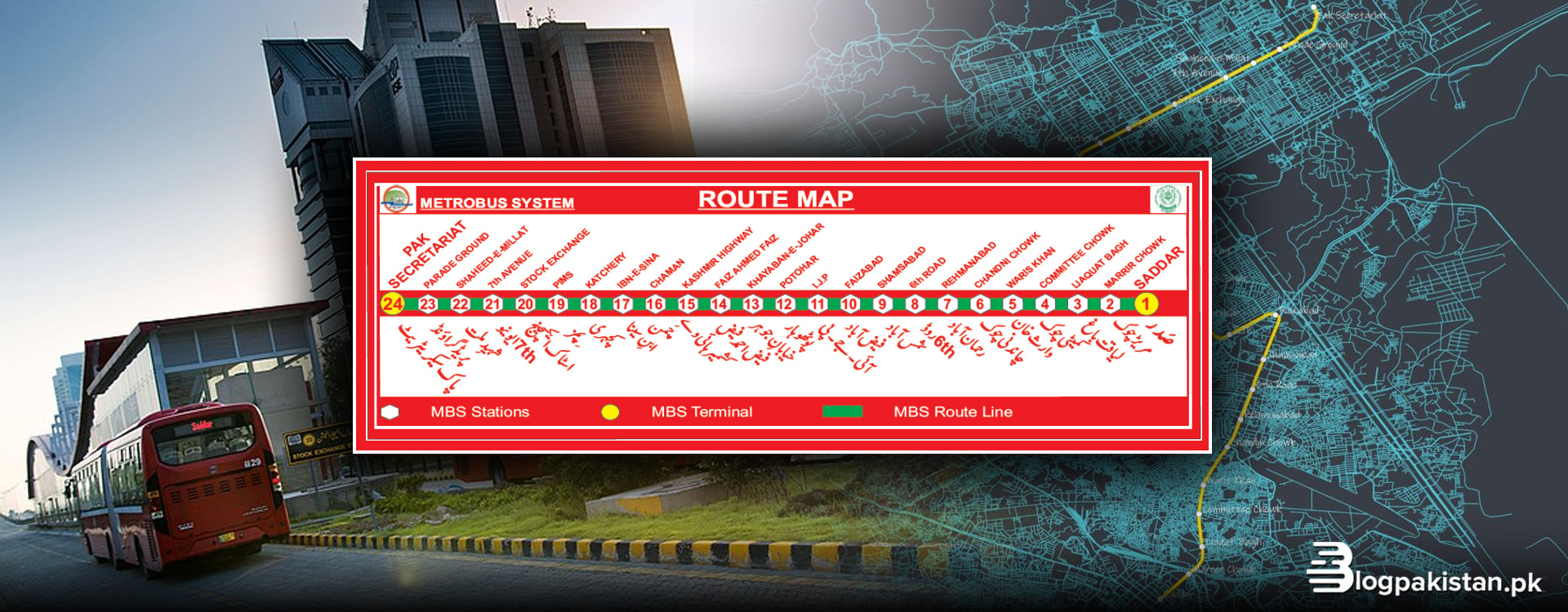
Line 1 went into service in June 2015. It begins in front of the Pakistan Secretariat, Islamabad and travels through heart of the capital, and ends in Saddar, Rawalpindi’s commercial district.
Metro stations / stops along the route are listed below in sequence:
- Pak Secretariat
- Parade Ground
- Shaheed-e-Millat
- 7th Avenue
- Stock Exchange
- PIMS
- Kachehry
- Ibn-e-Sina
- Chaman
- Kashmir Highway
- Faiz Ahmed Faiz
- Khayaban-e-Johar
- Potohar
- IJP
- Faizabad
- Shamsabad
- 6th Road
- Rehmanabad
- Chandni Chowk
- Waris Khan
- Committee Chowk
- Liaqat Bagh
- Marrir Chowk
- Saddar
Line 2 of Metro Bus Station
The 27-kilometre line 2 from Kashmir Highway metro station to the new Islamabad International Airport runs parallel to the Srinagar Highway. Line 2 metro bus stops are:
- Kashmir Highway
- H-9/G-9
- IIUI/G-10
- High Court
- H-11/G-11
- NUST/G-12 (East)
- NUST/G-12 (West)
- Golra Mor/G-13
- Grand Trunk Road
- Jammu & Kashmir/ G-15
- Badhana Kalan/G-16
- M1/M2 Interchange
- Rakh Pind Ranjha
- Islamabad Airport
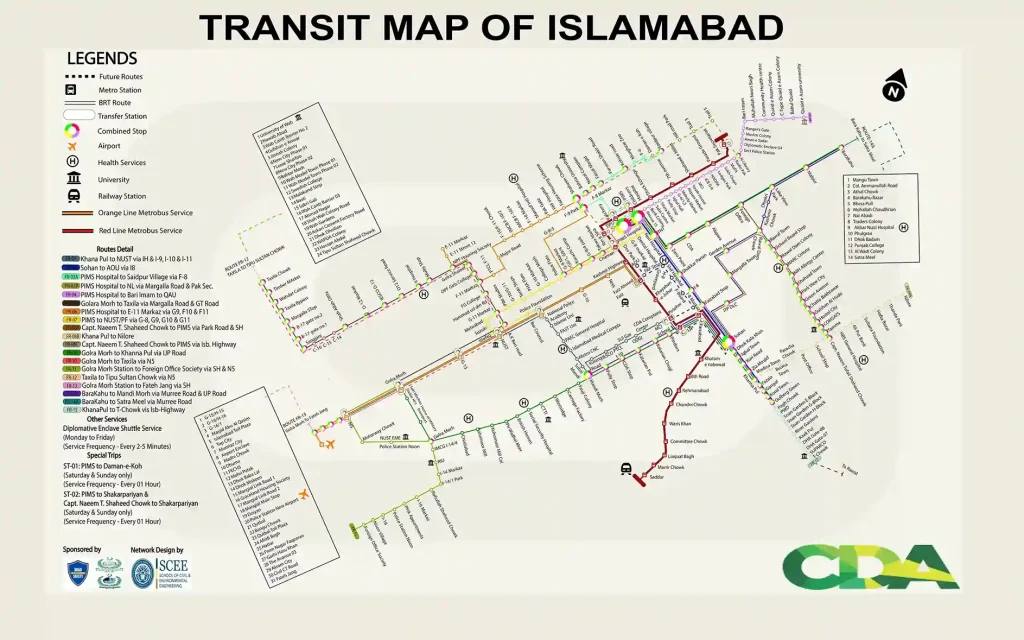
This metro bus route map is taken from official site of CDA.
Fare and Ticket of Metro Bus
As of 2026, the daily operation of the Metro Bus routes in Islamabad and Rawalpindi starts from 7:00 AM to 10:00 PM. It has an Intelligent Transportation System (ITS) along with a modern e-ticketing system providing QR code-based tokens for passengers, which they can scan easily at the entry/exit gates. The system also gives facilities like ticketing booths, escalators, toilets, platform display screens, and other passenger amenities ensuing safe travel for every passenger. A central ITS control room monitors and manages the entire Bus Rapid Transit (BRT) operations.
Both the metro bus card and the token serve the same purpose, but the card is better suited for someone who commutes to school/university or their workplace on a daily basis because they will not have to wait in line for a token. Passengers can also check metro bus times before starting their journey to avoid delays during peak hours.
A token, on the other hand, is only valid for one trip and has a time limit of about an hour, after which it is no longer accepted at the turnstile. If the token runs out of time and the person does not exit the turnstile, they are fined 50 rupees, which must be paid in cash on the spot. If the carrier misplaces the token, the same procedure is followed. Many commuters also search for the metro bus near me to find the closest station and route information while traveling. Besides metro buses, there are also Green Line buses that were launched this year in Punjab to provide a more flexible and easier transportation option for students.
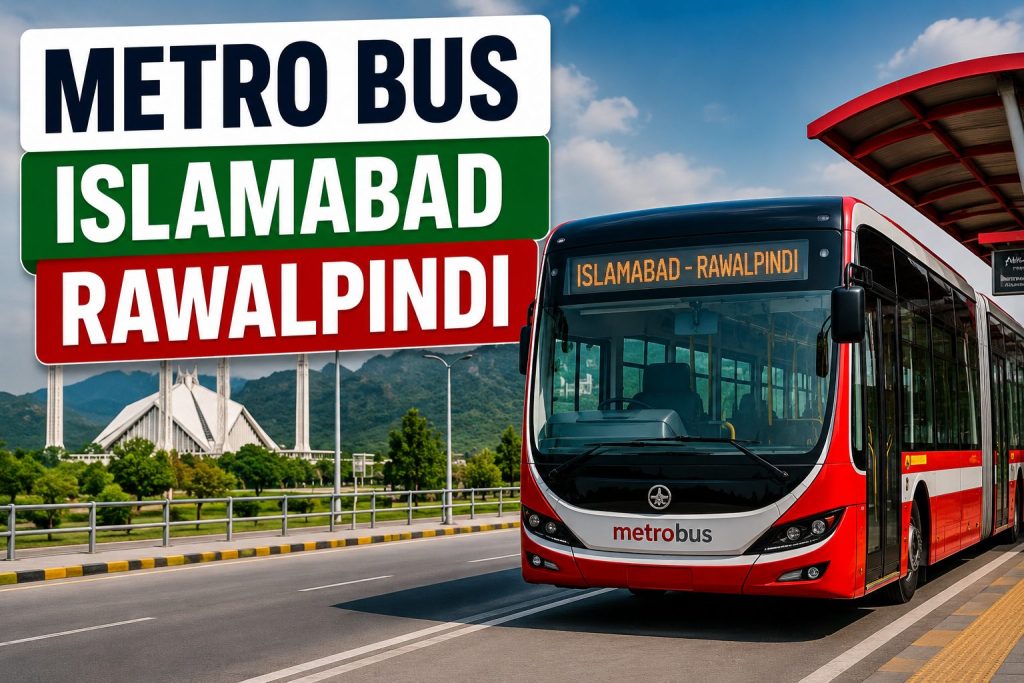
12 Interesting Facts about Metro Bus
- The Islamabad Metro Bus system consists of two routes, which are classified as Phase 1 and Phase 2.
- Phase 1 of the Metro Bus network runs for 23 kilometres between Islamabad’s Pak Secretariat and Rawalpindi’s Saddar.
- The second phase of the Islamabad Metro Bus route is approximately 25.6 kilometers long, running from Peshawar Morr Interchange to New Islamabad International Airport.
- The system makes use of an e-ticketing system.
- Islamabad-Rawalpindi Metro Bus costs approximately PKR 44.31 to 46 billion and has 24 bus stations.
- Previously, passengers were charged a one-way fare of PKR 30 for traveling on the Metro Bus service. However, as of 2026, the Metro Bus Route system is free of cost for all commuters, despite fluctuations in gasoline prices and transportation expenses.
- There are 68 buses in total, with 60 buses currently in use and 8 buses kept in reserve.
- Platform Turizm, a private Turkish company, owns the buses Major.
- Metro Buses in Islamabad have high operating, procurement, and maintenance costs.
- The Turkish company, Platform Turizm, also provides bus drivers. The Punjab Mass Transit Authority (PMA) provides the drivers with schedules and routes to follow.
- The Metro Bus Corridor is 23 kilometers long in total, with 8.6 kilometers elevated, 10 kilometers at grade, and four kilometers trench.
- According to 2026 reports, the Islamabad Metro Bus Route transports approximately 135,000 to 140,000 passengers per day.
Maintenance of Metro Busses
The Prime Minister of Pakistan and the Chief Minister of Punjab co-chaired a meeting in 2014 at which the federal and provincial governments approved the project on a 50:50 basis.
The Prime Minister delegated responsibility to the Punjab government through the Rawalpindi Development Authority because the Punjab government had completed a metro bus project in Lahore (RDA). When the metro bus project is completed, the Punjab Metro Bus Authority (PMA) will be in charge of its operation and maintenance.
Travelling Becomes Easier With the Metro!
Metro has made travelling easier for the local citizens of Islamabad and Rawalpindi. Students are utilising the services and saving a huge amount of money that they were spending on travel allowance plus CDA announced plans to add more buses to improve public transportation facilities in the city. This step aims to provide safer, more comfortable, and accessible travel options for daily commuters and students.